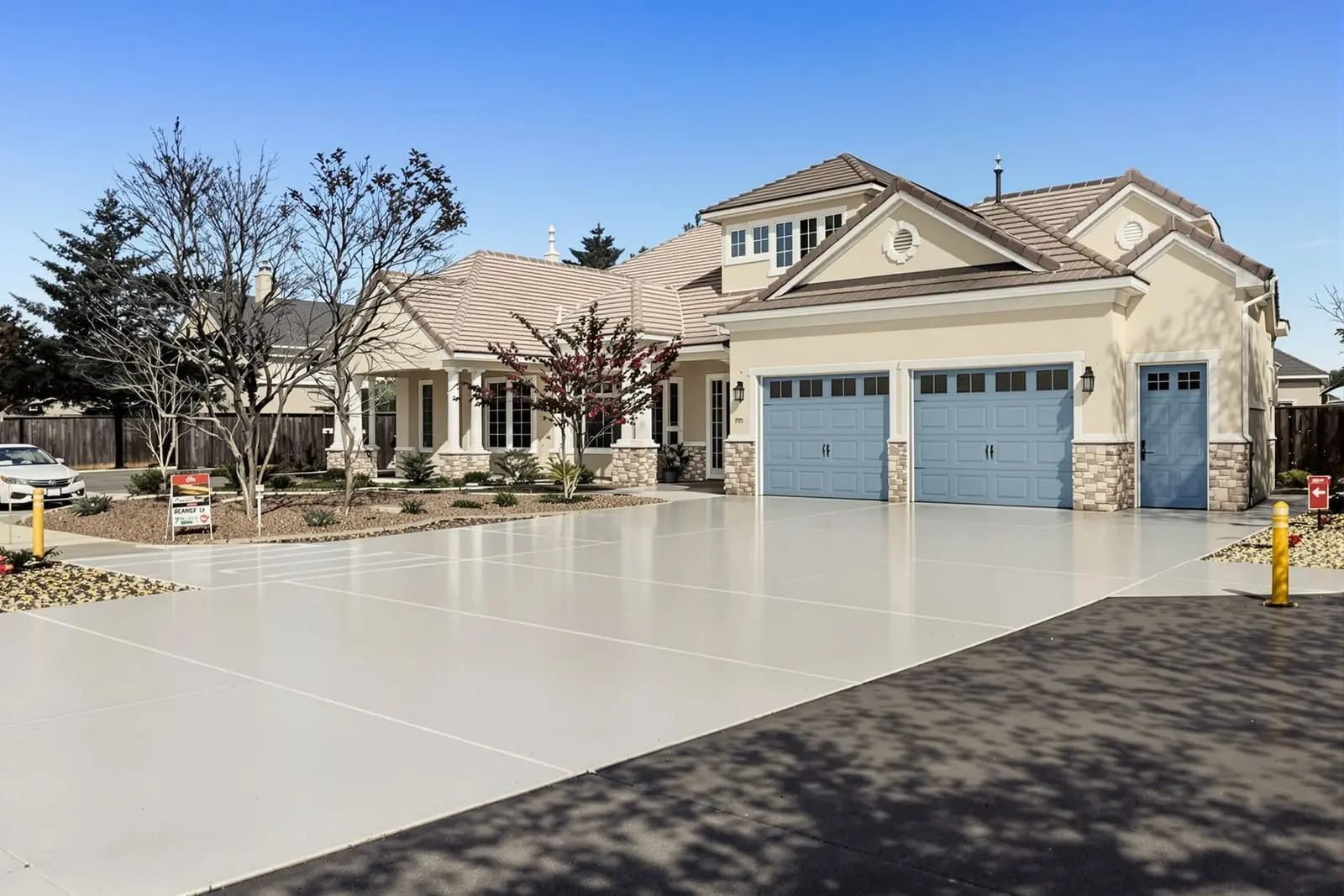
Keep your property accessible and professional with commercial concrete paving in Mobile, AL. We install heavy duty concrete for drive lanes, dumpster pads, entrances, and other high traffic areas. Our team coordinates around your operations to minimize downtime while delivering smooth, long lasting pavements.
Primetime Concrete Mobile provides professional commercial concrete paving throughout Mobile, AL and the surrounding area. Our licensed, insured crew delivers safe, clean, on-time work with a free estimate before anything begins. Call (251) 243-0279 or request your free quote.
Commercial Concrete Paving for Mobile Businesses
Primetime Concrete Mobile installs and repairs commercial concrete paving for properties across Mobile, from small storefronts on Dauphin Street to busy distribution yards near the port. When we talk about commercial concrete paving, we mean the full system: the base, reinforcement, mix design, joints, drainage, and surface finish, all planned around the traffic and weather that slab will see.
In Mobile, your paving has to deal with heat, afternoon storms, and occasional cold snaps. Concrete that might hold up fine in a dry climate can crack or heave here if it is not designed and installed for Gulf Coast conditions. We design slabs that handle heavy rain, standing water, delivery trucks, and frequent temperature swings, then we match the mix and thickness to what actually happens on your property instead of using a one-size-fits-all approach.
Whether you are planning new pavement for a shopping center, replacing worn out drive lanes at an apartment complex, or upgrading loading zones at an industrial site, we walk the site, test existing conditions where needed, and give you clear options. Our goal is simple: a concrete surface that stays usable and safe with as little interruption to your business as possible.
How Commercial Concrete Paving Is Installed Step by Step
Good commercial concrete paving starts below the surface. We begin with layout and saw cutting to remove old pavement where needed, then excavate to the required depth. In Mobile, we pay special attention to soft or saturated soils. If we find mud pockets or organics, we undercut and replace them with compacted aggregate so the slab does not settle later. Every lift of base material is compacted and checked so trucks will not create ruts over time.
Next we set forms and establish the proper slope. On most commercial jobs in Mobile, we aim for at least 1 to 2 percent fall toward drains or swales so water does not pond. We install reinforcement based on use: welded wire fabric or rebar grids for standard parking and light truck traffic, and heavier bar patterns or doweled joints where 18‑wheelers or garbage trucks will turn or stop.
Before the pour, we confirm the concrete mix design with the ready-mix plant. For commercial paving here, we typically specify a minimum 4,000 psi mix, air entrainment for durability in occasional cold weather, and proper slump so the crew can place it efficiently without adding water on site. During placement, we use screeds and, on larger areas, ride-on trowels or mechanical straightedges to achieve consistent thickness and smoothness.
Control joints are saw cut or tooled at planned intervals to control cracking. On big parking lots, we often tie slabs together with dowels at construction joints where daily pours meet. As soon as finishing is complete and the surface can accept it, we apply curing compound to slow moisture loss. In Mobile’s sun and humidity, this step keeps the slab from drying too fast and helps prevent shrinkage cracks and surface dusting.
Design Choices: Thickness, Finishes, Joints, and Drainage
Design decisions on a commercial concrete paving job have a big effect on cost and long-term performance. One of the first choices is slab thickness. For typical parking stalls and car drive lanes, 4 to 5 inches can work when the base is solid. For dumpster pads, delivery truck lanes, and loading areas, we often recommend 6 to 8 inches with heavier reinforcement. We will usually propose separate pavement sections so you are not paying for 8 inches of concrete everywhere if only certain strips need it.
Finish type is another decision. Most Mobile commercial sites use a broom finish for parking and sidewalks, which gives traction in our frequent rain. For higher visibility areas like entry plazas or bank drive-throughs, we can use medium broom with decorative borders, bands cut in with a saw, or exposed aggregate in limited zones. Around loading docks and ramps, a cross-broom or textured finish helps forklifts and workers maintain grip.
Joints and drainage are easy to overlook, but they drive how your paving behaves over time. We space control joints based on slab thickness and panel shape so cracks form where we want instead of randomly. On longer drive lanes, we plan construction joints at logical breaks, like between building bays or at changes in slope. For drainage, we match gutter lines, set inlets flush, and, when the site is flat, use trench drains or added inlets instead of letting water sheet across walkways. In Mobile’s storm-heavy months, those details keep water moving and reduce slip hazards and erosion at edges.
Costs, Scheduling, and Common Local Problems
Customers often ask what drives the cost of commercial concrete paving. The big factors are square footage, thickness, reinforcement type, base preparation, and access. A small parking lot with good existing base and 5 inches of concrete will cost far less per square foot than a truck court that needs 8 inches of reinforced concrete over a new crushed stone base. Sites in tight downtown locations or behind active businesses may require hand work, concrete pumps, or night and weekend pours, which affect price.
In Mobile, drainage corrections and unsuitable soils can add to the budget. If we find standing water, broken subdrains, or weak clay that pumps when we compact it, we will show you the problem and explain options: geotextile fabric, thicker base stone, or full-depth undercut and replacement. Addressing these issues before we pour costs less than fixing settled slabs or chronic ponding later.
Weather and scheduling are also specific to our area. Our heat and humidity mean we plan pours for early morning or late afternoon when possible, and we adjust labor and equipment so we can place and finish concrete quickly before it sets too fast. During peak storm seasons, we watch radar and do not start a major pour unless we have a long enough dry window. We also work around your business operations, often phasing parking lots so one section stays open while we rebuild another, or scheduling high-traffic entrance work during off-peak hours or weekends.
Common problems we see on older Mobile commercial paving include random cracking, surface scaling near the coast, and settled areas near downspouts or dumpster pads. When we replace or tie into these areas, we upgrade the base, redesign joint spacing, and adjust drainage so you do not see the same failures repeat in a few years.
What Mobile Property Owners Should Know Before Hiring
Before you hire a contractor for commercial concrete paving, it helps to know what to ask. Primetime Concrete Mobile encourages owners and property managers to ask about slab thickness, base preparation, reinforcement, and joint layout for each part of the project instead of accepting a generic note on a drawing. If a proposal does not clearly state these items, you will not know whether two bids are actually comparable.
Check that the contractor understands local conditions. In Mobile, that means they should talk about drainage, heavy rain events, and our soil types, not just quote a standard parking lot section. Ask how they plan to manage water on site during construction, where washout will occur, and how they will protect adjacent businesses, landscaping, and customers.
Also ask about phasing and access. A good plan will show which sections will be closed, for how long, and when you can safely drive on new concrete. For planning purposes, light car traffic on a typical commercial mix is usually allowed after several days, but heavy trucks and dumpsters should wait longer so the slab gains strength. We provide these timelines in writing so you can notify tenants and staff.
Finally, pay attention to details after the pour. A quality contractor will return to saw cut joints on time, check curing, and walk the project with you before final sign off. At Primetime Concrete Mobile, we review the work, discuss any maintenance tips such as sealing high-traffic sections or keeping heavy trucks off edges, and answer questions so you know exactly how to care for your new commercial concrete paving over the long term.
“
Professional commercial concrete paving, done right the first time, quality materials, honest pricing, and results that last.
Primetime Concrete Mobile
Commercial Concrete Paving Across Our Service Area