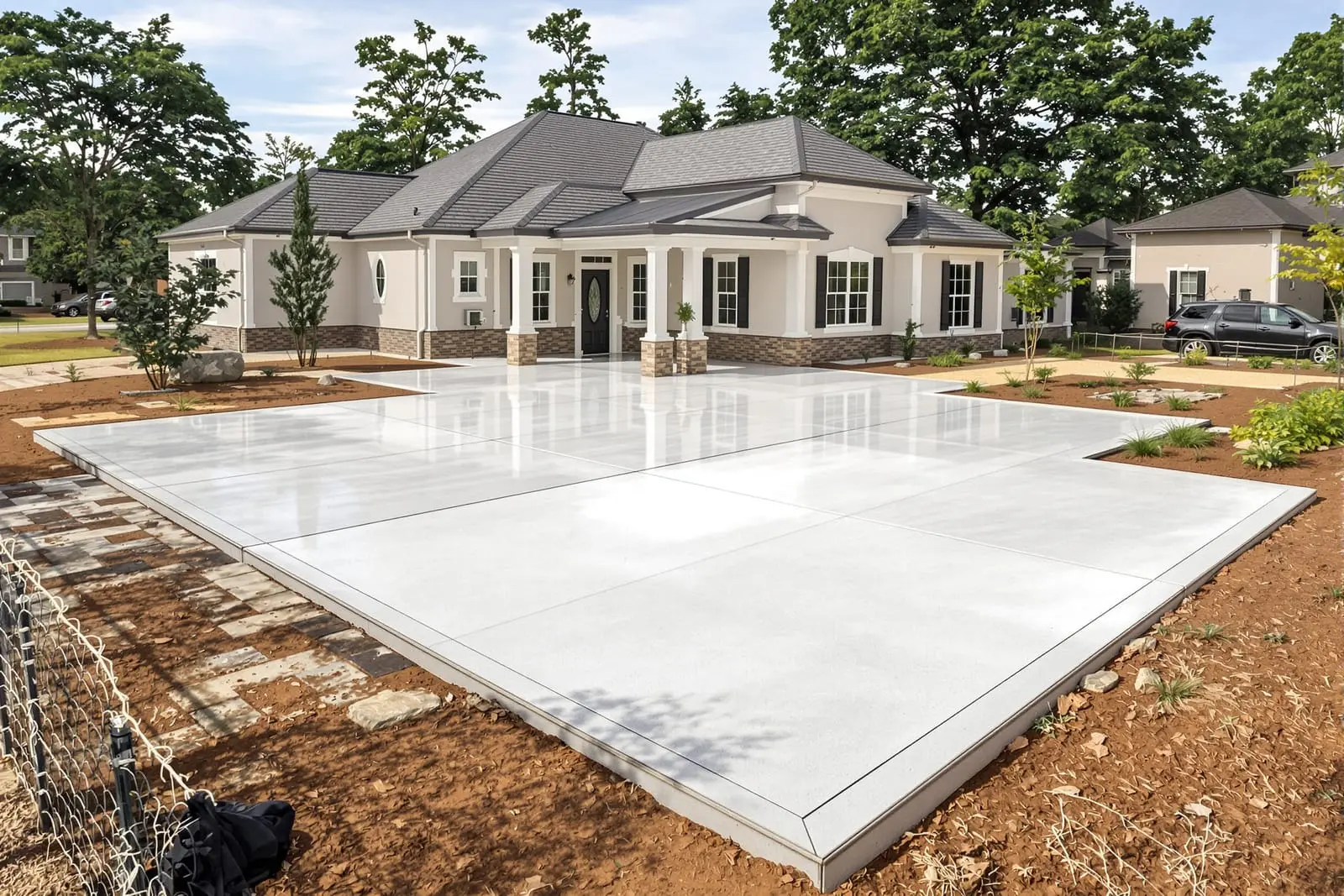
Build on a solid base with structural concrete in Mobile, AL. We provide sitework concrete like grade beams, piers, and structural slabs that support commercial buildings and infrastructure. Our team follows engineered specs and coordinates with other trades to keep projects moving on schedule.
Primetime Concrete Mobile provides professional structural concrete throughout Mobile, AL and the surrounding area. Our licensed, insured crew delivers safe, clean, on-time work with a free estimate before anything begins. Call (251) 243-0279 or request your free quote.
Sitework & Structural Concrete for Mobile Properties
Sitework and structural concrete are what everything else on your property depends on. If the ground is not prepared correctly or the concrete structure is not built to handle Gulf Coast conditions, you end up with cracks, settling, and water problems that only get worse.
Primetime Concrete Mobile focuses on sitework and structural concrete for homes, small commercial buildings, shops, and coastal properties around Mobile. That includes new builds in West Mobile subdivisions, additions in Midtown with older foundations, and slab repairs in areas with softer, wetter soils like Tillmans Corner and Theodore.
Structural concrete covers anything that carries real load: slabs, grade beams, footings, retaining walls, structural driveways, and equipment pads. Sitework is the prep that makes that concrete last, like grading, soil compaction, drainage layout, and base installation.
Our goal is practical. We look at your specific soil, how water moves across your lot, what your structure will weigh, and how you use the space every day. Then we design and build concrete that fits Mobile’s heat, humidity, and heavy rains so you are not paying to fix the same problem twice.
How We Approach Sitework on Mobile Soil
Good structural concrete starts with correct sitework. In Mobile, the soil can change a lot within a short distance, from firm sandy loam on higher ground to soft, saturated clay in low spots. Primetime Concrete Mobile starts each job with a site walk and a shovel test so we know what we are dealing with.
1. Site evaluation and layout. We check existing grades, spot low areas that hold water, locate roots and buried debris, and mark utilities. For older neighborhoods, we often find buried bricks, broken concrete, or construction trash that must be removed before any slab or footing goes in.
2. Cut, fill, and rough grading. We bring the building pad or slab area to design elevation. On sloped lots, we may cut into the hill and build up the low side with compacted fill so the concrete sits on uniform support. On coastal or low-lying lots, we often raise the pad a bit higher to help with drainage.
3. Subgrade preparation. Organic material, topsoil, and muck are stripped out. We replace any soft pockets with compactable fill and use plate compactors or rollers so the soil is tight. If the soil is very wet, we may let it dry or mix in aggregate to stabilize it instead of pouring onto mud.
4. Base installation. For slabs, driveways, and structural pads, we typically install a crushed stone base. It helps with drainage and spreads the load. Depth depends on use and soil conditions. A standard residential slab might use 4 inches of base, while a heavy RV pad or small shop slab might get 6 inches or more.
5. Drainage planning. Before forms go in, we look at how water will leave the area. We add swales, surface slopes, or French drain outlets where needed. Around retaining walls or deep footings we often specify perforated drain pipe and geotextile to manage groundwater.
Taking the time to handle these steps is what keeps structural concrete from settling or cracking badly in Mobile’s wet seasons.
Structural Concrete: Footings, Slabs, and Beams That Hold Up
Once the site is ready, we move into the structural concrete itself. Primetime Concrete Mobile builds concrete elements that carry real weight and resist movement, not just surface-level slabs.
Footings and grade beams. For homes and small commercial jobs we pour continuous footings or grade beams sized for the structure and soil. On softer or fill soils, we increase width or depth, add more steel, or tie into piers if an engineer calls for it. Depth is set to get below loose surface soils and to stay stable through our wet-dry cycles.
Structural slabs. A basic patio slab and a slab that supports a load-bearing wall or a two-post lift for a shop are not the same thing. We adjust slab thickness, rebar pattern, and concrete strength based on the loads. A typical house slab might be 4 inches with fiber or light mesh and thickened edges, while a shop or warehouse area may be 5 to 6 inches with #4 rebar on a tighter grid.
Walls and retaining structures. Around Mobile, retaining walls often deal with heavy rain and clay soils that hold water. We form and pour concrete walls with proper footing size, vertical and horizontal rebar, and drainage behind the wall. That usually means gravel backfill, filter fabric, and weep holes or pipe drains so the wall works with water instead of fighting it.
Stairs, landings, and structural entries. Exterior concrete stairs and raised entries must handle both traffic and weather. We form to consistent riser heights for safety, tie steps into landings with rebar, and pitch surfaces slightly so water does not sit and soak in.
Concrete mixes. For most structural work we use ready-mix concrete designed in the 3,000 to 4,000 psi range, adjusted for exposure and use. We pay attention to slump so concrete is workable without excessive water, since too much water weakens the slab and increases shrinkage cracks. On hot Mobile days we coordinate pour times and curing methods so the surface does not dry too fast.
Common Problems in Mobile and How We Prevent Them
Mobile’s heat, humidity, and heavy rains create specific challenges for structural concrete. Primetime Concrete Mobile is set up to address those conditions from the start.
Settlement and sinking. Poor fill and low compaction are the biggest causes of slabs dropping or cracking badly. We remove organic material, compact lifts of fill instead of piling it all in at once, and avoid pouring on saturated subgrades. On questionable soils we may recommend an engineer review before you invest in a large slab or structure.
Cracking. All concrete cracks to some degree, but we control where and how. We use proper control joint spacing, usually cut within 6 to 12 hours of finishing depending on the weather. We keep slabs isolated from footings or walls when needed so movement can occur at joints, not randomly through the middle of the floor.
Water and drainage issues. Many Mobile properties are flat, so water will sit wherever you let it. When we set form elevations we build intentional slope into driveways, patios, and slabs so rain has somewhere to go. Around structures and walls we plan drains or swales instead of hoping water finds its own way.
Surface scaling and finish problems. In hot or windy weather concrete can crust on top while staying soft underneath. Our crews adjust finishing timing, use proper curing methods, and avoid adding surface water to “retemper” concrete, which is a common shortcut that leads to weak surfaces.
Rusting reinforcement. In coastal or marshy parts of Mobile County there is a higher chance of chloride exposure and constant moisture. We make sure rebar and mesh have correct cover (concrete thickness over the steel) and avoid placing steel too close to the surface, which reduces the risk of rust and spalling later.
Costs, Timeline, and What to Ask Before You Hire
Sitework and structural concrete pricing in Mobile varies based on actual conditions, not just square footage. Primetime Concrete Mobile explains these factors up front so bids make sense.
What drives cost:
• Soil conditions. Soft, wet, or fill soils require more excavation, more compacted base, and sometimes thicker footings or slabs.
• Access. Tight backyards in Midtown or lots with no side access can require smaller equipment or more hand work, which affects labor.
• Thickness and reinforcement. Structural slabs, beams, and walls use more concrete and more steel than non‑structural flatwork.
• Drainage features. French drains, extra grading, or retaining wall drainage systems add materials and labor but often save money in long‑term repairs.
Typical timeline:
1. Site visit and estimate: usually within a few days of your call.
2. Layout and prep: 1 to 3 days for a standard residential project, longer for larger commercial work.
3. Forming, steel, and inspection (if required): 1 to 2 days.
4. Pour and finish: 1 day in most cases.
5. Initial cure: light foot traffic in 24 to 48 hours, heavier loads after 7 days, full strength around 28 days.
Questions you should ask any contractor:
• How will you handle drainage around this slab or structure on my particular lot?
• What slab thickness, footing size, and rebar layout are you proposing, and why?
• How will you prepare the subgrade and base, and what equipment will you use to compact it?
• Who is responsible for permits and inspections if they apply to this project?
If you want straightforward answers to those questions and a plan that fits Mobile conditions, Primetime Concrete Mobile is ready to walk your property and put together a clear sitework and structural concrete proposal.
“
Professional sitework & structural concrete, done right the first time, quality materials, honest pricing, and results that last.
Primetime Concrete Mobile
Sitework & Structural Concrete Across Our Service Area