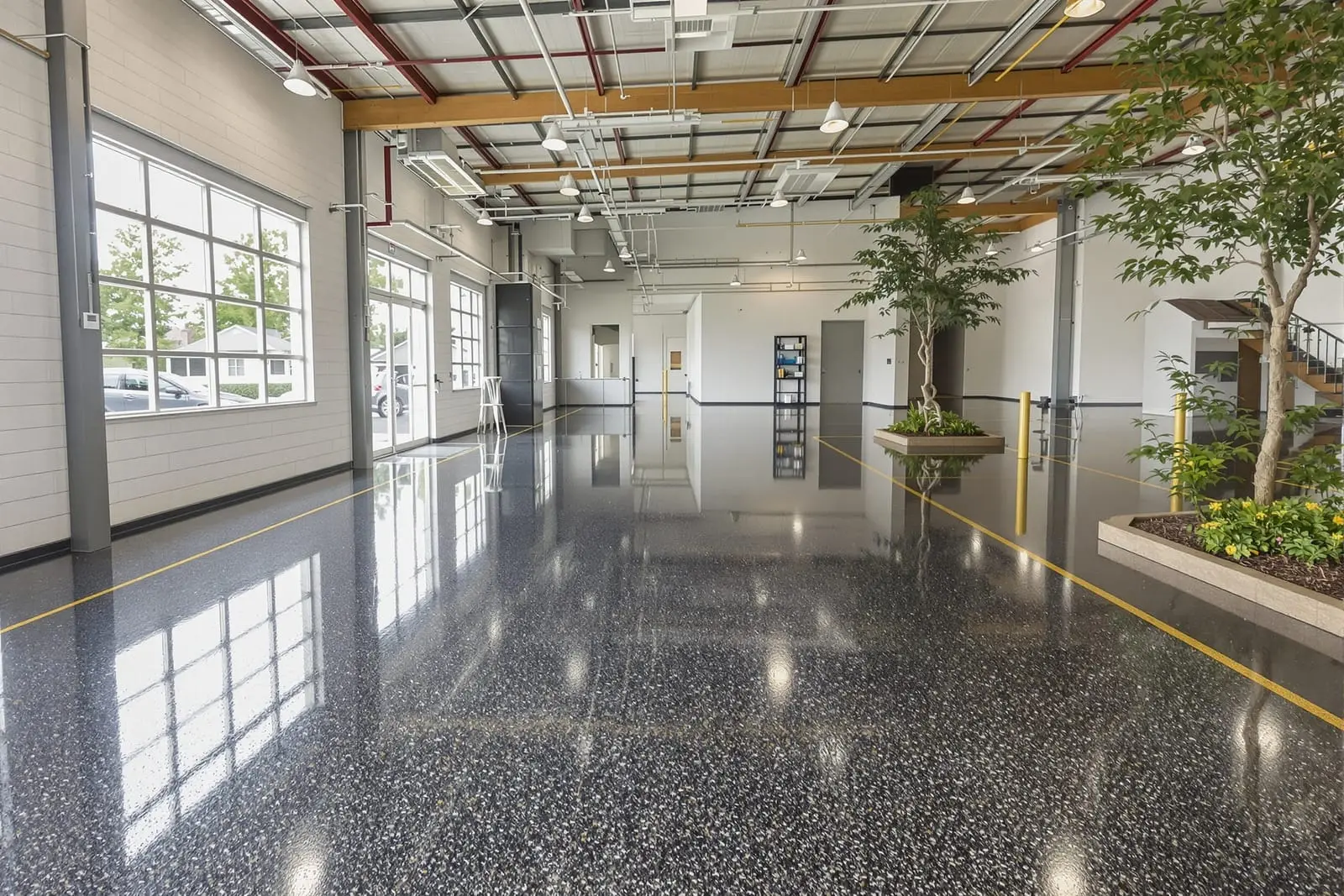
Support heavy operations with industrial concrete floors in Mobile, AL. We pour and finish warehouse slabs designed for forklifts, racking systems, and equipment loads. Proper joint layout, reinforcement, and surface treatments help control cracking and wear in demanding environments.
Primetime Concrete Mobile provides professional industrial concrete floors throughout Mobile, AL and the surrounding area. Our licensed, insured crew delivers safe, clean, on-time work with a free estimate before anything begins. Call (251) 243-0279 or request your free quote.
Durable industrial concrete floors for Mobile warehouses and plants
Warehouse and industrial concrete floors in Mobile have to stand up to heat, humidity, forklift traffic, and the occasional hurricane season power outage. Primetime Concrete Mobile focuses on floors that are practical to maintain in this climate, not just good looking on day one.
Before any pour, we evaluate how you use the space. We look at forklift wheel types, pallet jack routes, racking layout, chemical exposure, and whether you expect future machinery anchors or drains. That usage profile drives slab thickness, reinforcement, and finishing method so the floor performs for years without constant patching.
Because Mobile soil and groundwater conditions can move more than customers expect, we also pay close attention to subgrade stability and moisture. Skipping this step is one of the main reasons industrial slabs in our area start curling, cracking, or shedding dust well before their time. Our goal is straightforward: a floor that takes daily abuse, cleans up quickly, and does not interrupt your operations with preventable repairs.
How we build warehouse & industrial concrete floors that last
Our installation process is organized to keep your operations as smooth as possible.
1. Site evaluation and layout
We start with elevations, slab drainage planning, and joint layout. In older Mobile warehouses, we often have to correct past settlement or inconsistent slab thickness. We laser-check existing conditions and tie the new slab into existing concrete or foundations so lift trucks do not hit a bump every time they cross the joint.
2. Subgrade prep and vapor control
We grade and compact the base with plate compactors or rollers, then proof-roll to find soft areas. Where groundwater or moisture is a concern, we add a vapor barrier and, if needed, a capillary break layer. In the Gulf Coast climate, ignoring vapor can lead to flooring failures, coatings that peel, or constant sweating slabs.
3. Formwork, reinforcement, and embedded items
Next we set forms and place reinforcement. Depending on loads, this can be rebar, welded wire mesh, or structural fibers, and often a combination. If you need anchor bolts, machine pads, dock leveler pockets, or floor drains, we install and brace those at this stage so they end up exactly where your equipment plans require.
4. Concrete placement and finishing
We typically use a mix designed for industrial floors with controlled slump and limited shrinkage. We place concrete using chute, pump, or buggy depending on access, then strike off with screeds and laser-guided equipment for flatness. Power trowels are used to achieve the desired finish, from light broom for traction in loading areas to hard trowel for interior forklift aisles.
5. Curing, joint cutting, and sealing
Proper curing is critical in our heat and humidity. We use curing compounds or wet cure methods to control moisture loss. Saw-cut control joints are laid out and cut on a schedule that matches the mix and weather so they do their job without random cracking. Finally, we seal joints and, when specified, apply surface sealers to resist staining, abrasion, or chemical attack.
Design options for different industrial operations
Not every industrial concrete floor should look or behave the same. Primetime Concrete Mobile helps you match the floor design to your business.
Heavy forklift and racking areas
For distribution centers and logistics hubs, we focus on slab thickness, reinforcement, and joint strategy. Dowel baskets and keyed joints can reduce joint spalling where forklift wheels cross hundreds of times per day. We also pay close attention to flatness and levelness around racking to keep high-bay systems safe.
Manufacturing and processing
If you run fabrication, food processing, or chemical handling in Mobile, chemical resistance and cleanability become critical. We may adjust mix design, use hardeners, or prepare the slab for specialty coatings like epoxy or urethane. Where hot water washdowns are common, we consider slope and drainage so water moves to trench drains instead of pooling under equipment.
Repair shops, service facilities, and mixed-use spaces
Auto, marine, and equipment shops along the Gulf often need impact resistance and stain resistance. We can incorporate steel or synthetic fibers in the mix, specify higher strength concrete, and finish with densifiers or sealers that resist oil, grease, and solvents. For mixed-use industrial buildings, we can combine finishes, for example a high traction broom finish at dock doors and a smooth troweled finish in assembly areas.
Color, treatments, and markings
For safety and traffic control, we can prep floors for line striping, color zones, and marked pedestrian aisles. While basic industrial slabs are typically gray, we can also polish and densify surfaces in office-adjacent areas so you get a more professional look where customers or vendors might walk.
What drives cost for industrial concrete floors in Mobile
Understanding the main cost drivers helps you budget realistically and compare quotes fairly.
Slab thickness and reinforcement
The heaviest factor is usually slab thickness and the reinforcement system. A light-duty warehouse with hand carts can often use a thinner slab with basic mesh, but high-bay storage with narrow aisle forklifts may need a thicker slab, dowel baskets at joints, and possibly fibers, all of which affect material and labor costs.
Access, phasing, and downtime
Many Mobile facilities stay busy year-round, so we often install in phases. Working around active operations, night pours, or tight downtown sites where pumping is required can change pricing. We are upfront about how different schedules or access limitations will influence the cost so you can weigh production downtime against project expense.
Subgrade conditions and moisture
Poor soils, existing slab removal, and moisture mitigation are common surprises. If your warehouse was built decades ago or sits on previously filled land, we may recommend undercutting soft spots, adding stone, or improving drainage. These steps add cost but can save you from slab movement and slab curling that disrupts equipment later.
Finishes and treatments
Plain troweled concrete is cost-effective, but once you add polishing, densifiers, hardeners, or chemical-resistant coatings, the price changes. We walk you through options with real examples of life-cycle cost, not just the install price, so you see how a slightly higher upfront investment could lower future maintenance and repair spending.
Common Mobile-specific issues and how Primetime Concrete Mobile addresses them
Industrial concrete floors along the Gulf Coast run into a few recurring problems that we plan for from the start.
Moisture and slab sweating
Our humidity and temperature swings can cause concrete to sweat. This is hazardous around forklifts and pedestrians. We evaluate air flow, insulation, and vapor conditions, then recommend solutions such as proper vapor barriers, densifiers that reduce surface permeability, or surface profile changes in known problem zones like dock doors.
Thermal and load movement at door openings
Dock doors exposed to Mobile heat and occasional cold snaps, along with constant forklift crossings, are where we see the most edge damage. We reinforce these thresholds, use appropriate joint details, and may suggest armored joint systems to keep the slab edge from raveling.
Chemical and salt exposure
Facilities near the port or handling marine equipment often see salt and corrosive spills. In these areas, we look at mix designs with appropriate cement content and admixtures, and plan for surface treatments that can resist salts and regular washdowns.
Repairs and tie-ins to old slabs
When you expand an older Mobile warehouse, tying new concrete into deteriorated slabs can be tricky. We evaluate whether the existing slab is worth saving, then use dowels, saw cuts, and surface prep so the transition is smooth and cracks do not telegraph into the new section.
Planning your project and best timing in Mobile, AL
In our climate, industrial concrete floors can be installed most of the year, but timing and planning matter.
Weather and curing conditions
Spring and fall in Mobile usually offer the best combination of temperatures and predictable weather for larger pours. Summer heat means faster set times, so we adjust mix and schedule finishing crews accordingly, often pouring earlier in the day. During hurricane season, we pay close attention to forecasts, since wind-driven rain can damage a fresh surface.
Preconstruction coordination
Before we mobilize, Primetime Concrete Mobile works with your operations team to map out access routes, shutdown windows, and safety protocols. For active facilities, we often recommend a test area first. This allows you to see the finish and performance, and it lets us verify how the slab behaves with your traffic before completing the full space.
Permits, engineering, and inspections
Larger warehouse and industrial slabs may require engineered drawings and, in some cases, permits or inspections. We can coordinate with your engineer or help you connect with one familiar with Mobile codes and industrial loads. Scheduling these pieces early keeps your project from stalling after demolition or grading has already started.
If you are considering new warehouse or industrial concrete floors or replacing an underperforming slab, the team at Primetime Concrete Mobile is ready to walk the site, review your operations, and propose a practical, durable solution tailored to the way you work.
“
Professional warehouse & industrial concrete floors, done right the first time, quality materials, honest pricing, and results that last.
Primetime Concrete Mobile
Warehouse & Industrial Concrete Floors Across Our Service Area