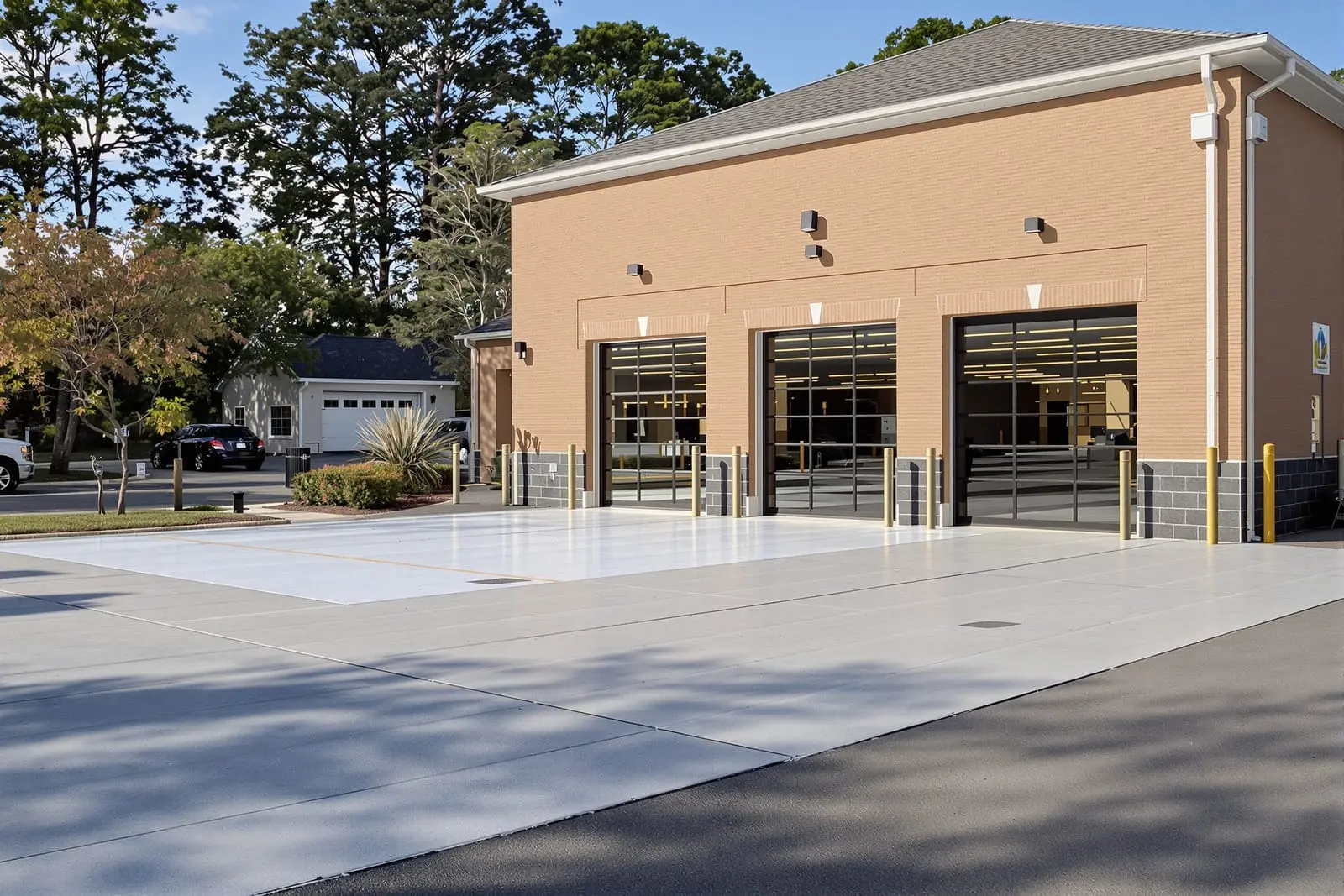
Keep shipping operations moving with a commercial concrete slab in Mobile, AL. We build loading docks, truck aprons, and heavy duty pads designed for frequent truck traffic and point loads. Proper thickness, reinforcement, and slope ensure reliable performance and drainage.
Primetime Concrete Mobile provides professional commercial concrete slab throughout Mobile, AL and the surrounding area. Our licensed, insured crew delivers safe, clean, on-time work with a free estimate before anything begins. Call (251) 243-0279 or request your free quote.
Engineered Commercial Concrete Slabs for Real-World Use
Primetime Concrete Mobile designs and installs commercial concrete slabs that are built for the way your operation actually runs. Whether you are adding a loading dock behind a warehouse, pouring a slab for a manufacturing line, or reinforcing an existing floor to handle heavier loads, we start by looking at how the space will be used in day to day work.
We factor in forklift traffic patterns, pallet jack routes, rack layouts, trailer locations, and where water tends to collect during Gulf Coast storms. In Mobile, AL, that local knowledge matters. Soil conditions shift from sandy fill near the port and I 10 to heavier clay pockets further inland, and those differences dictate how we prepare the subgrade and how thick the slab needs to be.
Our team works directly with owners, facility managers, and general contractors to match slab thickness, rebar or wire reinforcement, and joint layout to your specific loads and equipment. Primetime Concrete Mobile is not guessing from a chart. We size your commercial concrete slab based on actual weight ratings, including concentrated rack legs, dock levelers, and repeated wheel paths from heavy equipment.
How We Build Loading Docks That Keep Freight Moving
A good loading dock is a combination of correct elevations, proper drainage, and a slab that does not crumble under constant impact. We start by confirming dock height relative to the trailers you see most often. In Mobile, many facilities serve a mix of dry vans and containers from the port. We typically target 48 to 52 inches from finished floor to drive surface, then fine tune based on your dock leveler specs.
Primetime Concrete Mobile cuts and grades the drive approach so trucks can back in smoothly without scraping bumpers or bottoming out. We then build up compacted base material, usually a blend of crushed limestone or dense graded aggregate, compacted in thin lifts with a plate or roller compactor. In areas with weaker or saturated soil, we increase base thickness or add a geotextile fabric so the slab has a stable foundation.
At the dock face, we set rebar cages and extra reinforcement under dock levelers, truck restraints, and bumpers, because those points see hard, repeated impact. Edges are often thickened, sometimes to 12 inches or more, to resist spalling when trailers hit the concrete. Anchor bolts and embeds for dock equipment are set before the pour, so everything lines up with your metal pit frames and bumpers.
Commercial Slab Design: Thickness, Reinforcement, and Joints
The right design for a commercial concrete slab in Mobile is a balance of structural strength, cost, and long term maintainability. For light duty storage or standard office build outs, a 4 inch slab with wire mesh may be enough. For forklift aisles, racking systems, and heavy loading docks, Primetime Concrete Mobile typically recommends 6 inches or more with rebar on proper chairs, not just tossed into the mix.
We often use #4 rebar at 12 or 18 inches on center each way, tied into continuous perimeter beams. For very heavy storage, machinery pads, or container yards, we may step up rebar size or spacing based on load calculations. Fiber reinforced concrete is sometimes added as a supplement to steel, especially for impact resistance and controlling micro cracking, but it does not replace proper steel in heavy duty slabs.
Control joints are planned to manage where the slab will want to crack as it shrinks and moves with temperature. We either saw cut or tool joints at calculated intervals based on slab thickness and panel layout. Around dock levelers, column bases, and building corners, we add additional reinforcement and sometimes adjust joint spacing, so cracking does not form right at a critical piece of equipment.
Concrete Mixes and Finishes That Hold Up in Mobile, AL
Our commercial concrete slabs use mix designs geared for Gulf Coast conditions. Higher humidity and frequent rain in Mobile affect both curing and long term performance. Primetime Concrete Mobile typically specifies a 4,000 psi or stronger mix for loading docks and high traffic slabs, with a low water cement ratio for better durability and reduced shrinkage.
Air entrainment is considered based on exposure. In covered interiors it may not be critical, but exterior docks that see occasional cold snaps, deicing products, and standing water benefit from a durable surface mix. Where chemical exposure is expected, such as near fuel storage or certain industrial processes, we adjust mix design or add protective toppings so the slab resists breakdown.
For finishes, we usually recommend a broom finish for exterior loading docks and approaches so truck drivers and forklifts keep traction in the rain. Interior commercial slabs can be trowel finished smooth or given a light profile if an epoxy, urethane, or polished system will be installed later. We discuss future coatings and floor coverings early, because they affect how we finish the concrete and when we cut joints.
What Drives the Cost of a Commercial Concrete Slab
Commercial concrete slab pricing in Mobile depends on more than square footage. Site access is a major factor. Tight alleys behind downtown buildings, overhead power lines, or limited room for concrete trucks can require pumping or additional labor. Open industrial sites with direct truck access are usually more cost efficient.
Subgrade conditions are another big driver. If we hit soft, saturated soils or old buried debris, we may need undercutting, additional base stone, or stabilization. That extra prep work prevents settling and cracking later, but it adds time and materials. Thicker sections around docks, equipment pads, or drive lanes also add to concrete and steel quantities.
Primetime Concrete Mobile breaks down your estimate so you can see how thickness, reinforcement type, base depth, and finishes affect cost. This transparency lets you decide where to invest more, such as in reinforcement at high traffic points, and where you might save, such as reducing thickness in non critical adjacent areas. We also plan pours around Mobile weather patterns, scheduling early morning or evening placements in the hottest months to reduce finishing issues and rework.
Common Problems We Solve on Loading Docks and Slabs
Many of our projects involve fixing or replacing commercial concrete slabs that were not designed for real world use. A frequent issue in Mobile loading docks is edge spalling where trailer wheels consistently track too close to a thin slab edge. We correct this by cutting back the failed area, thickening the new edge, adding more reinforcement, and installing proper joint layout so impact is transferred evenly.
Another common problem is ponding water near dock doors and in drive lanes. Improper slopes or settlement can send stormwater toward the building instead of away from it. Primetime Concrete Mobile addresses this with careful regrading, adjusted slab elevations, and, when needed, trench or area drains tied into functional storm systems. We also pay attention to how neighboring properties drain, which is critical in low lying Mobile neighborhoods that already see heavy runoff.
Inside warehouses and plants, we see slabs that curl at the joints or develop random cracking around heavy racks or machinery. This is often the result of inadequate joint layout, too little reinforcement, or poor curing practices. We use doweled joints, correct saw cut timing, and proper curing compounds or wet curing methods so the slab gains strength evenly and stays flatter for sensitive equipment and lift trucks.
Planning Your Project With Primetime Concrete Mobile
A successful loading dock or commercial slab project starts with a clear plan. We begin with a site visit in Mobile or the surrounding areas to measure existing grades, check soil conditions, and review your traffic patterns and equipment specs. From there, Primetime Concrete Mobile prepares a written scope that spells out thicknesses, reinforcement, mix design, joint pattern, and any specialty details like dock pits or drains.
We coordinate with other trades so anchor bolts, conduits, and plumbing sleeves are in place before the pour. On pour day, our crew manages forming, placing, consolidating, and finishing the concrete so you get a flat, dense slab that meets the specified tolerances. After finishing, we cure the slab correctly, then return to saw cut joints at the right time to avoid raveling and uncontrolled cracking.
For active facilities, we can stage work so you keep part of your dock or warehouse open while sections are being replaced. We also advise on realistic cure times before you put full forklift or truck loads on the slab, which protects your investment. If you are planning a new building, expanding your dock, or replacing a failing commercial concrete slab in Mobile, Primetime Concrete Mobile can help you design and build it to handle the next decade of use, not just the first year.
“
Professional loading docks & commercial slabs, done right the first time, quality materials, honest pricing, and results that last.
Primetime Concrete Mobile
Loading Docks & Commercial Slabs Across Our Service Area